This is a story about my client, one who endured horrific treatment at the hands of powerful men in Africa. She was left for dead in a forest strewn with bodies, but lived—and really lived once she escaped to the U.S. One day last month, I met with her in her home, and she dissolved into tears as we talked about life. The job search had shoved her into hopelessness, she said, but that day her hunger was louder than her fear of receiving another eviction notice. She had nothing to eat and still a week left until her next food assistance allotment came.
I love my job, performing the work of helping people find jobs. Employment is wonderful, but it’s not edible. So, I used my laptop that day in my client’s home to locate food shelves instead of career links. I found a pantry nearby, called it, and said my person needed groceries. I registered her over the phone, found out she qualified for a box of food for seniors (“It’s nothing fresh, unfortunately, but she’ll get canned and dry goods,” the lady on the phone said), and captured the address of the pick-up location—just two miles from my client’s home.
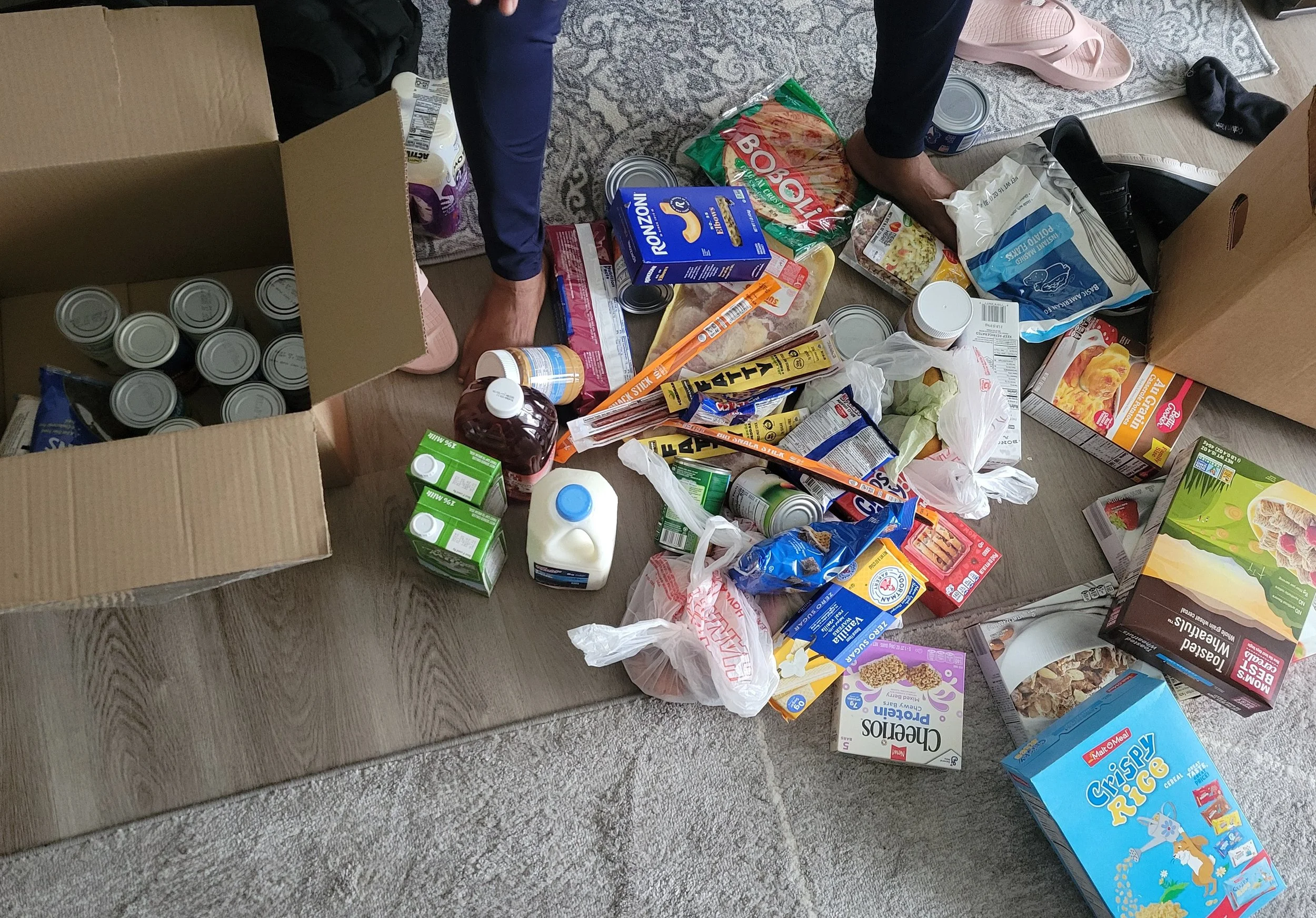
She and I drove there in the rain. She hoped the donation would be okay for her; she was diabetic, after all. I knocked on the correct door of the warehouse, raindrops dotting my jacket. The workers carried not one but five boxes of food to the back of my car and loaded them in.
At my client’s home, we opened everything. The lady on the phone had been wrong. Two of the boxes were filled with fresh items: potatoes, apples, milk, chicken, eggs, and bread. Three of them held rice, cereals, canned goods, and of all things, sugar-free cookies—the kind my person could eat.
For almost a month after the food day, I helped my client get a job; it was a struggle from the start. An error in the input of her Social Security Number set the process back by a couple of weeks, the background check dragged on before clearing, and public transportation to the employment location was confusing, but finally, she got to work.
And then the nightmare started. The manager was cruel, from the sounds of it, snapping at my client when she asked about her schedule, depriving her of a chair during her breaks, watching her on security cameras as she fumbled through exhausting shifts, and preventing coworkers from assisting or offering her comfort. No appropriate training, no guidance on the job, no respect in front of customers. My finger hovered over the phone number for HR for one, two, three days. Instead, I received a call from management.
All the days before that call, I saw my client a certain way: traumatized yet sweet, struggling yet soft, hurting yet kind, lacking yet generous. Then I heard what was going on at work from work itself, and I knew their telling was accurate. I fit shards of the story together—the truth, the narrative—and it was proof a splintered mind had risen from a fractured body back in a forest in Africa.
What do we do when the story isn’t as it seems? How do we hear the truth about those who walk among us? We believe them—until we don’t. Each step matters—to hear them, to preserve them, to discern them, to act on behalf of their foundational needs, and to quiet them with compassion.
But the truth stands, so we pivot in love. Mercy triumphs over judgment.
(Note: I significantly altered and/or left out the details in this story to protect the identity of the people mentioned.)
*Has My Blonde Life inspired or entertained you? If you wish to toss a tip into my writerly coffers, here's how you can do it: @Tamara-Schierkolk (Venmo), @TamaraSchierkolk (PayPal), or $TamaraSchierkolk (Cash App)
*Names in this blog have been changed to protect my family, neighbors, and friends in the neighborhood, and in a nod of appreciation to the beloved Swedish author Maj Lindman, I’ve renamed my three blondies Flicka, Ricka, and Dicka and their husbands (present and future), Snipp, Snapp, and Snurr.