Fruit (part 3): PEACE

I type this blog while sitting on the porch on a warm October evening in 2020. Somewhere in our neighborhood, gunshots tatter the air—again. And I’m tired.

Why can’t we all just get along?

Back to the fruit bowl I go, eyeing its third offering now.

But the fruit of the Spirit is love, joy, peace, patience, kindness, goodness, faithfulness, gentleness, and self-control. Against such things, there is no law.

Today’s story happened about five years ago, but its truth still holds.

PEACE.

*****

Latika, our one-year-old houseguest, bounced in the Johnny Jump Up mounted in the kitchen doorway. Smiling, she banged a plastic measuring cup on the tray in front of her while I stood at the kitchen counter arranging the frozen potato rounds on the meat mixture in the baking dish. My girls had reminded me I hadn’t made the Minnesota staple in months, and would I do it tonight? I smiled at the normalcy of Tater Tot Hotdish, the exuberant baby bobbing near me, and the family being home together for the evening. The humble, simple, peaceful life.

POP! POP! POP! POP! POP!

The blasts outside jarred me and brought to mind Fireworks or Gunshots?, a game we Northsiders too often played. But this time was easy; the higher-pitched crack of each report told me the answer. I flew to the kitchen window. Our dog, Lala, stood erect outside at the back gate, and her strident barks and raised hair told me she had chosen the same answer I had.

A young man dashed from the rental property across the alley. He darted looks in both directions, his right hand under his t-shirt—the fabric revealing the outline of a gun. He jogged down the alley to the north and disappeared.

I deserted my lookout and rushed into the living room where Husband was parked in a chair. I jabbed my thumb toward the kitchen.

“Those were gunshots. And I just saw the shooter.” I rattled off the details.

“Okay.” Husband stood up, strode from the room, and exited the house.

Within seconds, sirens wailed. I lifted the baby from her seat, planted her on my hip, and looked out the window again. A squad car zoomed through the alley, and a second one stopped by our garage. Two officers emerged, and they spoke with Husband for a few minutes. He poked his head into the house. “I told the police what you saw. They want to talk to you.”

I handed the baby to Flicka and stepped outside. An ambulance arrived, its lights flashing. A police officer stretched yellow tape across the alley.

Another officer ambled toward me. “So, you saw the guy?”

“I heard five shots, looked out the window, and saw him run out of there.” I pointed at the rental property. “He went north.”

“What did he look like?”

I described the perpetrator, recounting how the man’s hand was hidden under his shirt.

He nodded. “What color shirt?”

I tilted my head and frowned. “I don’t remember. I was watching his hand—and where he ran. I could tell he had a gun.”

“But you don’t remember the color of his shirt?”

Was it dark—maybe grey or blue? If it had been red or yellow, I might have remembered. I shook my head. “I’m sorry. I don’t.”

The officer thanked me and walked away.

Husband nodded toward the commotion in the alley. “The guy who got shot is on the ground in the back yard over there.”

I searched my man’s face. “Do you think he’s dead?”

“Who knows? I couldn’t see much. People were already crowding around him.”

I stared at the emergency workers, law enforcement, and curious passersby. A week earlier, we had grilled burgers, and my main concern was whether or not we had enough ketchup. Today I wondered about the state of the victim, lying on a lawn close to our house.

After a few hours, the crowd dissipated, the yellow tape vanished, and normal life resumed. The news later provided spare details about the young man who had been sniped down in the yard near ours, and we learned the ending of his story: he had died in the ambulance on the way to North Memorial.

Shaken by our close proximity to the homicide, I mulled over the day’s happenings that evening. Shootings in our part of the city were as common as Tater Tot Hotdish at a Midwestern potluck. What could we do? Too many people in our neighborhood, country, and world cried out for peace, but if they did anything about it, they chose good behavior’s temporary fix, their efforts shiny but brittle. And too often their plastic peace only showed up in tattoos, bumper stickers, and necklaces.

So, what was the answer? And where was the lasting, unbreakable Peace that transcended all understanding—and guarded the hearts and minds of humanity?

He had stood among the onlookers across the alley that day, longing to be invited in.

And He still waits.

police-line-3953745_640.jpg

*Names in this blog have been changed to protect my family, neighbors, and friends in the neighborhood, and in a nod of appreciation to the beloved Swedish author Maj Lindman, I’ve renamed my three blondies Flicka, Ricka, and Dicka.

Fruit (part 2): JOY

In the bowl of fruit, this one—sometimes both sweet and bitter—doesn’t always make sense.

But the fruit of the Spirit is love, joy, peace, patience, kindness, goodness, faithfulness, gentleness, and self-control. Against such things, there is no law.

Here’s your story for today: JOY.

*****

The twenty-six-year-old woman sat in a chair at the Thanksgiving table. The wavelike motion in her belly reminded her today was her due date. But babies—not doctors—chose their own arrival times; her three-year-old daughter had been born two weeks late, after all.

Like the brimming dishes of food in front of her on this day—November 28, 1968—she saw all the good things that overflowed in her life. She turned to her little girl sitting next to her and cut the child’s food into small pieces. She glanced at her husband across the table and smiled. Soon, they would be a family of four.

But two days later, something changed; the fluttery movements within her, which for months had accompanied her daily life, stopped. Concerned, she told her husband. He drove her to the emergency room the next day, and a doctor listened to her stomach with a stethoscope.

He furrowed his brow, his gaze fixed on her face. “I can’t find a heartbeat.”

Her husband frowned, and she shifted in her seat. Could this be? Could it mean what she feared most?

She cleared her throat, her eyes wide. “What will we do if the baby is—?”

“We won’t do anything.” The doctor pursed his lips. “Labor will start at some point, but it’s hard to know when.”

The woman bit her lower lip and nodded. If only today she could’ve seen her own doctor. Someone she knew—and someone who knew her. “Thank you.”

The couple stood. The woman clutched her husband’s arm as they left the emergency room.

On the drive home, she sank into her thoughts. Memories of her recent miscarriage pricked her. And now this. What if all was not well? If the unthinkable were true, how long would she carry a dead baby? For a moment, icy fingers of dread curled around her spine. But she couldn’t think that way; doctors had been wrong before.

Late that night, the young woman’s water broke. Labor pains rolled through her body, and grateful their three-year-old was already in her mother-in-law’s care, she woke her husband. The two climbed into the car for the second trip to the hospital that day.

A few miles down the road, a new idea prodded her. She studied her husband, his mouth a straight line as he gripped the steering wheel, navigating the snow-covered gravel road. She swallowed hard. “If we have a girl—and she’s not living—I think we should name her Joy.”

He looked at her, and the corners of his mouth curved up for a second. “Yes. That’s good.” He stared at the road again, and silence seeped into the car.

The young mother labored through the night. In the early morning of December 2, 1968, at Northwestern Hospital in Thief River Falls, Minnesota, Joy came into the world. But the delivery room was still. And no infant cries shredded the air.

Weeping may endure for a night, but joy comes in the morning.


Every now and then throughout the years, our family spoke of the baby who was gone before she came. And when I was an adult with children of my own, we still spoke of her.

“But if Joy had lived, we wouldn’t have had you.” Mom smiled at me.

“I know, Mom.” I thought of my place in the family order—the one following the time of sadness. I imagined losing one of my own. The thought knifed my heart.

“Then you came—and your three siblings after you. Life has been good.” She nodded. “Always so good.”


As a child, I envisioned the older sister I never met. And I thought of her namesake—that emotion everyone sought. But how could my parents have named their dead baby Joy?

Consider it joy when you encounter various trials…

My childhood path led to adulthood, the terrain becoming more treacherous in spots. And along the way I learned joy wasn’t a synonym for happiness—that fair-weather emotion, dependent on favorable circumstances. Happiness could only travel the smooth, exhilarating way—and only when the temperature was seventy degrees and sunny; during the jagged and stormy parts, the fickle feeling bolted.

On the drive to the hospital that night in 1968—although my mother hadn’t known why—something compelled her to choose a new name for the baby who was already gone. But because of the Creator of Joy in her life, the baby’s name characterized the uncertain and rugged path ahead.

And like Mom, I pressed into Him in my own rocky places too, gaining the same lesson: with The Joy-giver near me, the condition of the road didn’t matter anymore.

joy.jpg

*Names in this blog have been changed to protect my family, neighbors, and friends in the neighborhood, and in a nod of appreciation to the beloved Swedish author Maj Lindman, I’ve renamed my three blondies Flicka, Ricka, and Dicka.

Fruit (part 1): LOVE

These days I’m craving fruit. And I don’t mean the kind you find in the produce section of your grocery store.

But the fruit of the Spirit is love, joy, peace, patience, kindness, goodness, faithfulness, gentleness, and self-control. Against such things, there is no law.

For the next nine weeks, I’ll tell you stories of fruit in action—a different fruit for each week. Some are retold stories, some are new.

Here’s your first one to enjoy: LOVE.

*****

On Valentine’s Day 2018, Husband snipped the ends from a dozen roses and divided them into four vases. He placed chocolates next to each and strode to the kitchen, ready to spend the next four hours preparing a surprise dinner for the girls and me.

He cooked curry chicken with garlic over a fire in the pit in the back yard. Then came oysters with chorizo butter, mashed potatoes and gravy, and an assortment of cheeses and olives. 

The five of us settled into our places at the table. I surveyed the feast, moved by the effort.

“This is delicious,” I said to Husband. “But you’re not a fan of curry.”

“I’m a fan of you.”

He reminded me of someone just then, and I wanted the girls to hear it—again.

“Girls, I have a story for you,” I said.

Between bites, our three teenagers watched me.

“There once was a very kind man. He was a respected landowner too. One day, a young immigrant woman came to his field during the barley harvest. Poor people back then were allowed to pick up the grain left on the ground by the harvesters. So, that’s what she did.”

“Mom, we already know this story,” Ricka said, resting her fork for a beat.

I nodded and kept going. “The man asked his employees about the young woman. They said her name, Ruth, and where she came from, and it was a country most people despised. So, she was an outsider from a hated place. They told him Ruth had lost her husband, and she lived with her mother-in-law who had also lost her husband. She was taking care of the older woman when she could’ve left her. Two women living together, trying to make ends meet in a time when widows had no options.

“The landowner caught up with Ruth. ‘I’ve heard about how kind you’ve been to your mother-in-law. I hope God blesses you for everything you’ve done. By the way, don’t go to another field. Stay here and you’ll be safe. I’ve told my men not to touch you.’

“Later, he invited Ruth to rest and have lunch with him. When she went back to work, he pulled his men aside. ‘Leave extra grain on the ground for her to pick up, okay?’ he said. And that’s what they did.

“Ruth went home that night and told her mother-in-law all about her day, and the older woman said, ‘That’s Boaz! He’s a relative of my husband’s. You should go back again.’ And she did. Eventually the kindness of Boaz won Ruth, and she did something daring: she asked him to be a covering for her. ‘You’re my family redeemer,’ she said one night.

“Boaz accepted Ruth’s proposal, lavished her with compassion and honor, and they married. The End,” I said, my vision going blurry.

“Oh, Mom,” Flicka said, tilting her head, her gaze soft.

If prayers travel a path to heaven, mine—that each of my girls would find her Boaz—have worn the trail smooth by now.

That night in 2018, we enjoyed a fancy meal together and celebrated the pink and red plastic holiday a greeting card company invented. But true love doesn’t waltz in for one day in February. Instead, it sticks with the mourner. It leaves extra grain for the immigrant. It cooks a curry dish for a fan when it doesn’t like curry.

And it covers another with its life.

fruit-2135856_640.jpg

*Names in this blog have been changed to protect my family and friends in the neighborhood, and in a nod of appreciation to the beloved Swedish author Maj Lindman, I’ve renamed my three blondies Flicka, Ricka, and Dicka.

Death, birth, and a party for the blog

My dad died on September 18, 2006.

My blog, My Blonde Life, was born on September 18, 2014.

I didn’t intend to share the month and day of Dad’s departure with my writing’s arrival, but so it went.

… the day of one’s death is better than the day of one’s birth.

I imagine King Solomon, the likely author of Ecclesiastes, penning those words with a scowl. Death better than birth? The guy must’ve been having a bad day. Or a bad week. Maybe even a bad year.

Life in 2020 is no piece of cake, but let’s enjoy a slice together anyway since someone’s having a birthday tomorrow.  

Happy 6th birthday, My Blonde Life! I’m glad you were born.

(If you haven’t already, invite a friend to subscribe to my blog today. They might even thank you later.)

L to R: Flicka, Ricka, and Dicka and the birthday (carrot) cake Flicka baked from scratch today.

L to R: Flicka, Ricka, and Dicka and the birthday (carrot) cake Flicka baked from scratch today.

*Names in this blog have been changed to protect my family and friends in the neighborhood, and in a nod of appreciation to the beloved Swedish author Maj Lindman, I’ve renamed my three blondies Flicka, Ricka, and Dicka.

What happens in the night

I turned the faucet off at the kitchen sink and drank from the glass I had filled, glancing at the clock. 2:08 a.m. The motion sensor light affixed to our garage snapped on, lighting up my peripheral vision. Movement in the backyard. I hustled to the window.

A group of people strode into our yard through the back gate, leaving it open behind them. I counted. Twelve in total. What on earth? They moved with purpose and hollered to each other, my heartrate cranking higher with each of their steps—which were closing in on our back door. Husband was out of town for work and the girls were asleep; I was the only one awake to manage what might come. The two locks on the back door now seemed skimpy.

No good can come of a group of strangers—teenagers, I saw as they approached—prowling in a person’s backyard in the night. Were they headed for the door? Would they pound on it when they got there? Maybe kick it in?

Five feet from the house, the group swerved left and cut through our side gate. I jogged to the dining room, grabbed the phone, and hovered my finger above the nine as I watched from the window over the buffet. The kids advanced through the side yard and spilled onto the sidewalk in front of our home. Their voices rose in laughter. One shoved another in play. The nighttime rovers strutted off down the avenue and vanished.

I set down the phone and crawled back into bed. Sleep was far off.

After that night, I would awaken some mornings to our gates hanging open. Who had passed through our backyard while we slept? Great droves of humanity? Or just a single nocturnal sojourner? It seemed our house, midway down the block, was a passageway for people traipsing through. We didn’t spy any stolen possessions or damage to our property, though, so what was the problem? The question roiled my stomach. The idea that people sauntered by our windows while we snoozed on the other side of the glass rattled me.

Several years ago, Husband purchased security cameras for our place. After their installation, he spent his mornings sipping coffee and scrolling through the previous night’s footage on his phone.

“Anything interesting?” I asked.

“Not really,” he said.

And day after day, his response was the same.

On our family trip in the summer of 2019, Husband still reviewed the recordings each morning.

“Anything new?” I said over a cup of hotel coffee one day.

He shook his head. “Before we got cameras, I thought there were all kinds of nefarious activities going on in our backyard every night.” He took a drink from his mug. “Yeah, not so much.”

But the next morning on our trip, he stared at his phone, his eyes sparking.

“Something exciting this time?” I said.

“There were three different cats in our yard last night.”

“Hm.” Who did the roving creatures belong to? Or were they feral animals out for a good time?

The day after, Husband again reported his findings. “Two more cats are coming around now.”

“Surprised we didn’t trick them with our lights on timers,” I said.

“They’re smarter than people, apparently.”

We finished our trip with Husband’s feline tally totaling six. But while the number of furry-footed trespassers increased in our absence, their nighttime presence disappeared upon our return. The human yard travelers of the past maybe spotted our security cameras and avoided the place. But the cats didn’t care. They knew when we were home and when we weren’t.

And what happens in the night stays in the night. Or something.

cat-2579323_640.jpg

*Names in this blog have been changed to protect my family and friends in the neighborhood, and in a nod of appreciation to the beloved Swedish author Maj Lindman, I’ve renamed my three blondies Flicka, Ricka, and Dicka.

Walls

Need a little escape today?

I’ve got something for you. It’s a piece of flash fiction I wrote in 2014 called Walls. (It won an award back then and got published too. Fun times.)

Disclaimer: if you’re looking for something rainbowy and unicornish to read, this isn’t it. (But maybe it gives you hope for your next home renovation.)

*****

In many ways, it made perfect sense to tear out the walls down to the studs. Beatrice needed the change, the newness. Even the old drywall reminded her of Hank. Was renovating a bathroom such a big deal? For years, he’d said so. She remembered the last time she’d asked.

“Don’t have the money right now,” he said, a sneer playing on his lip.

“But I’ve put away a little.” Beatrice pulled a wad of cash from her bathrobe pocket. What she meant was enough.

He peered at her through narrowed eyes, his mouth hard. “Where’d you get that?”

“Some from the rummage sale a couple years ago. Some from gifts. My birthday, Christmas, you know.”

“You been keeping that when the door needed fixing? And my truck got that ding?” He extended a hand. “I’ll take that.”

Her smile slid off, and she dropped the roll of cash into his palm.

He counted out the bills, keeping the number to himself.

“What about the bathroom?” she said, her tone set to neutral.

He snorted. “What about the bathroom?”

After thirty-five years of marriage, she was used to his sarcasm. It didn’t slice into her anymore, but his mimicry still shredded her. She turned away, hot tears breaking free. She clenched her teeth.

That was the last time she’d asked about the bathroom. And only four months before he was gone.

Now she watched the handyman. Dust thickened the air as the man hacked through the walls. Hank’s walls. Now hers.

Hank. She recalled the day of his funeral.

“Did you know he had heart problems?” her friend asked, flanking her near the casket.

“Most of the men in his family went that way,” Beatrice said. “He never got checked.”

“Well, I’m sorry. So sudden.”

She squinted at his waxy face. “I know.”

Well-wishers told her what a guy he was—how solid, how predictable. She nodded and accepted all the hugs paid out to her.

Her grown daughter stared at Hank’s body. “Mom. He never wore a suit in real life. Why now?” Krista had her dad’s way, his eyes.

“They just do that. It’s an expectation.”

“Well, it’s stupid. This looks nothing like him.”

Beatrice gave her girl a half-hug, and more people pressed in around her.

“He sure had a way about him. That sense of humor,” a friend of Hank’s said, shaking his head.

Beatrice frowned. Sense of humor? Hank breathed earth’s air just last week, and she couldn’t remember.

She couldn’t remember him.

In the sanctuary, the pastor talked about life, about being reunited with Hank one day. Beatrice wondered...

When the service ended, six of Hank’s buddies carried his body away. Her gaze trailed after the coffin.

There he goes.

As people filed out, she abandoned her pew and walked into the room where the refreshments would be served. Ham on buns, potato salad, pickles, cake. Hank’s favorites. She made her way into the church’s kitchen, tied on an apron, and busied herself filling the platters.

“What are you doing back here, honey?” a woman asked.

“Serving,” Beatrice said.

“Not today. You sit down. But take some food first.”

She straightened the edge of the first layer of buns. “But I’m on the schedule.”

“Not at your own husband’s funeral.”

Beatrice took off the apron and hung it up again. Now what?

The evening of the funeral, emptiness warmed the house. Krista had bolted after the burial. Beatrice understood. She wanted to be alone too, so she refused her friends’ offers to stay with her.

She walked from room to room and inhaled the quiet, the peace. When she reached the bathroom, she sat on the closed toilet lid and stared at the faded blue wall—imagined it gone. The red tape had been pulled away, the shackles unclasped.

Beatrice waited out the weekend and on Monday morning made the call. “I’d like to have my bathroom renovated.”

“I’m sorry to hear about your husband’s passing,” the man on the other end of the line said. “We read about it in the paper and—”

She strode to the bathroom and peeled back the shower curtain for another look. “Could you come this week and do it?”

“We do an estimate first. That’s how it works. But we could take care of it this week. Least we can do.”

“Okay. Any day is fine.”

Beatrice figured she had enough credit on one card to cover it.

Now excitement bubbled through her as she watched the demolition. The crumbling walls.

“What on earth?” The handyman stopped and squatted, zeroing in on one area of the rubble.

“What?” Beatrice edged closer. Through the dust, she eyed bundles—many bundles—of something.

He turned toward her, clutching dusty handfuls of green bills held together by rubber bands. “And there’s more.”

Among the stacks once hidden in the wall, Beatrice spied a single roll of cash—her cash—and the hole that led into Hank’s closet.

She swallowed, her eyes wide. It was never about the money.

Only about the walls.

wesley-pacifico-J9puVclr_Qc-unsplash.jpg

*Names in this blog have been changed to protect my family and friends in the neighborhood, and in a nod of appreciation to the beloved Swedish author Maj Lindman, I’ve renamed my three blondies Flicka, Ricka, and Dicka.

Close

These days, uncertainty seems a little too close for comfort. I think of how danger slinks at the edges of our lives too. Or at least it feels that way.

Yesterday I clicked through some old writings of mine and found this one from early 2015. Perils lurked outside our front door then too, but I like how my five-and-a-half-years-younger self saw it. She had the right idea.

*****

The brick commercial building—lodged between the corner store and our house—was lackluster, and only its changing name captured my eye over the years. In the early days in the neighborhood, the sign indicated the building was home to Islamic gatherings. Then it went vacant. A year later, it sprang from obscurity, snagging attention from the big news outlets. The building had been used as an illegal after-hours club, we learned, and at 3:00 a.m. on March 7, 2013, almost a hundred people were gathered at the establishment when an argument sparked, turning into a scuffle. By the time it was over, two men were dead—one inside, one outside. And the two shooters had fled. The usual course of action followed: law enforcement marked off the place as a crime scene, investigations ensued, and the police issued the landlord a notice of nuisance—the legal form of a slap on the wrist—and he boarded up the building.

The morning after the shootings, we rubbed our eyes and wondered what had gone down a half block away at the brick building while we slept in our warm beds. The streets—for many blocks around—were barricaded, and exiting the neighborhood was as tricky as in the 2011 tornado’s aftermath. When the situation cooled, we noticed mourners had slipped in behind the yellow tape to build a memorial on the sidewalk. They left behind teddy bears, flowers, signs, photos of the deceased, and remnants of meals consumed right there on the pavement. The only things that touched us from the tragedy were the fast-food wrappers that blew on March winds into our yard.

The double homicide was close. But no bullets ripped through our lives. And neither did fear.

My brother, a New York City dweller, called me one day.

“So I’ve been streaming Joe Soucheray’s Garage Logic out of Saint Paul,” he said. “Anyway, a local news story came up. Notice any unusual police activity at the end of your block?”

“No,” I said. “But I haven’t been looking.”

“Sounds like a guy’s holding his girlfriend hostage,” he said. “They’ve got the place surrounded.”

I poked my head out the front door and flicked my gaze down the street.

“Well, sure enough,” I said.

The place hummed with activity. Police cars lined the streets and a SWAT team stood in position. Officers surrounded the house in question, guns drawn.

“Since it’s a domestic, you’ve got nothing to worry about,” my brother said.

“I’m not worried.”

The hostage situation was close. But no abusive boyfriend barred me inside my home. And neither did fear.

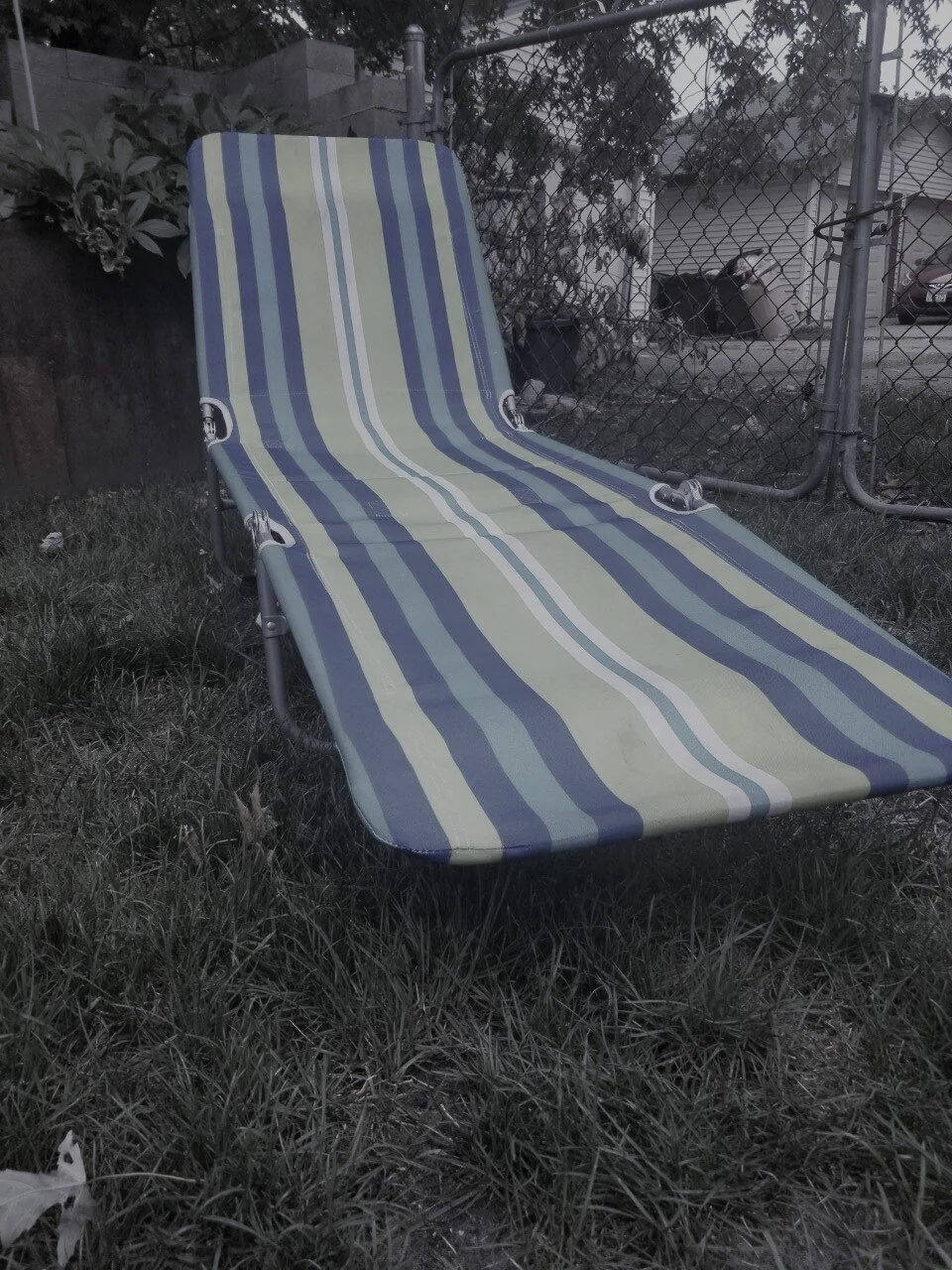
My neighbor Marta had a favorite spot in her back yard—her lounge chair—where she’d bask for a measure of each fleeting summer day. But on a Tuesday in the summer of 2014, obligation beckoned. Marta, a formidable culinary force, arose from her chair to serve the common good: she had a BBQ rib contest to judge.

While she was away, two cars sped through the neighborhood, the drivers working out their grievances through open car windows. But finding words insufficient, the men settled their differences with lead. One bullet penetrated a neighbor’s fascia, and another pierced Marta’s fence and skidded to rest in her most cherished place in paradise: right under the seat of her lounge chair.

The drive-by was close. But Marta still lived without fear—and laughed whenever she retold the story about the day she wasn’t hit in the backside by a bullet.

One of the shooters in the double homicide in the brick building on the corner pleaded guilty to manslaughter and was sentenced to nearly nine years in prison; the other had a second-degree murder charge against him dropped after serving almost a year. The hostage-taker in the house at the end of the block was apprehended, never to return. And the police caught the two speeding drivers and arrested them for gunplay on a residential street.

We knew the past, but we didn’t think it into our future. Unruffled by the exceptions who passed through our streets with guns, our area of the city always settled back into a rhythm. No over-the-shoulder glances, no lost sleep.

To be safe, though, we kept our doors shut tight, leaving fear locked outside where it belonged.

lounge chair.jpg

*Names in this blog have been changed to protect my family, neighbors, and friends in the neighborhood, and in a nod of appreciation to the beloved Swedish author Maj Lindman, I’ve renamed my three blondies Flicka, Ricka, and Dicka.

The weekend (and the lawn)

On Friday night, a storm ripped through our neighborhood, uprooting a tree and pitching it onto our house. We lost power, which challenged the weekend with our little houseguests, and my cellphone quit. And as if the mess from the event wasn’t enough, mental illness ran amok just outside our front door, rocking our block, threatening our safety, robbing my peace.

I recall 2002. I hadn’t even unpacked all the boxes in our new-to-us house in North Minneapolis when the love your neighbor thing switched my eyes open to life outside our curtains. And here I am again, eighteen years later, peeking out between the swaths of fabric at my windows, wondering, “Am I really my brother’s keeper?”

Yeah, I guess I still am.

These days I’d rather take care of those of us inside our house—our little visitors, our family members—and sleep at night okay with that. But dire circumstances outside call for intervention.

Let us not grow weary in well-doing.

For now, I’m weary in well-doing. Maybe tomorrow will feel different.

Here’s a light and fluffy story about the lawn (and the dog) for you to enjoy while I curl into myself for a minute.

Peace to you. May rest be yours too.

*****

Another rainy day.

The patches of grass in the backyard seem to withdraw from the lawn’s bald spots like they don’t enjoy getting muddy any more than I do. But Lala, our dog, doesn’t share our feelings. She finishes her duties in the drizzle and bounds for the back door, first making certain to gallop through the slimiest section of the yard. 

“Wait,” I tell her when she steps inside.

She knows what I want. She raises one paw at a time as I wipe off her feet with an old towel.

“Okay, go,” I finally say, and she lopes toward my white couch.

But I didn’t get her feet well enough, and the kitchen is now stamped with her signature. I sigh and wipe down the tile. By now, she and I have memorized our routine.

“Big dog, small yard,” the lawn treatment guy says with a knowledgeable sniff the next time I see him. “Yeah, you can’t have nice grass with all that going on.”

I already knew a lush lawn and a sixty-five pound dog were mutually exclusive. If we didn’t have Lala, we wouldn’t have all the mud in the house on a sodden day either. But we’ve made our (dog) bed, and now we lie in it.

Later, this animal of ours snuggles with the girls while they watch a movie. She repositions a pillow under her head for maximum comfort, opposable thumbs apparently optional. The tip of her tail flicks the air while she snoozes. When she switches her eyes open again, she licks the girls’ toes like they spent the day working barefoot at a meat-packing plant.

And when it’s my turn for bed, Lala plops down next to me, presses her flank against mine, and gazes at me with eyes like the oceans. I know that look. 

“I love you too,” I say.

Fine. We’ll take the scrappy lawn.

meadow-3375052_640.jpg

*Names in this blog have been changed to protect my family and friends in the neighborhood, and in a nod of appreciation to the beloved Swedish author Maj Lindman, I’ve renamed my three blondies Flicka, Ricka, and Dicka.

The ten-mile walk

“Let’s go for a twenty-mile walk tomorrow,” I said to the family one evening in April.

My people and I had lived the day as a bunch of snack-noshing sluggards, flickering screens of entertainment dazzling us for hours. Our eyes were bleary from TV, our backs sore from inactivity. Enough was enough.

“Let’s do it,” Flicka said.

“I’m in,” Husband said.

But the next morning, April 9, my bold proposal from the day before scared me.

“How about not twenty miles?” I said, fingers threaded around the cup holding my Italian roast. “That might’ve been the junk food talking last night.”

“Oh, I see how it is.” Husband chuckled. “Backing out now. Got it.”

I waved a palm in the air. “No, no. I’m just saying how about ten miles instead?”

I strode to the living room window to gather my own weather report. White precipitation pelted our sidewalk at a slant.

“Whoa.” Husband stood next to me. “I didn’t know this was coming.”

I grimaced. “We can always cancel the walk.”

“Let’s just see.”

And we did. In minutes, a new world loomed outside the glass. Snow gone, the sun shot arrows of blessing on the day.

We tugged on our jackets, tied on our shoes, and grabbed our water bottles.

We parked the car in the parking lot at Wirth Lake, and Husband, Flicka, and I started our long walk. At Cedar Lake, the sun warmed our faces. My down jacket was too much. Unzipping it, I contemplated losing a thermal shirt, one of my four layers.

“I didn’t know it would be this warm,” Flicka said.

Our path curved around the lake and delivered us to Lake of the Isles. The wind slashed through my layers, and I zipped up again. Covid-19 had reduced the foot traffic around the chain of lakes on this day—or was it the fickle weather?—and a twinge of sadness streaked through my thoughts. On a normal spring day, the lakes would be loaded with runners, bikers, and dogs tethered to their owners. Not today.

In Uptown, we waited for the crosswalk light to change, the sun heating the stocking caps on our heads.

“We’re at three miles,” Husband said, pointing at Bde Maka Ska ahead. “Let’s walk around the lake and head back.”

The circumference of Bde Maka Ska, roughly three miles, would put us at six after we looped it. His calculations would be just about right to hit our ten miles back at the car.

I opened my jacket again. We strode along the west side of the lake. A lone woman perched on a rock—decked out like winter—and gazed at the ripples, gray and moving. We rounded the south side of the body of water.

“Look at that skyline,” I said. The buildings in downtown Minneapolis were all shades of blue-gray, the waters of the lake, gray-blue. A world of melancholy beauty. “I’ve never seen it in those colors.”

“It depends on what it’s reflecting—and the sun that day,” Flicka said.

Great gusts of wind ruffled the waters, and the day grayed to slate. A chill took a bite into my clothing. I shut my jacket. Was the weather today imitating life?

“I didn’t know it would be this cold,” I said.

“Didn’t think it would be,” Husband said, “but at least it’s not raining.”

The skies opened up their storehouses and scattered white on us. The water next to us whipped in its hole; the clouds darkened. Up went my jacket, and I fastened it at the top to cover my mouth. I tugged my hat closer and pulled up my hood.

“This is actually a squall now,” I said, trying to catch my breath.

The three of us went silent. It would take yelling to communicate, so we didn’t. Snow blasted our left sides as we spanned the south end of Bde Maka Ska. The winds drew tears from my eyes.

Count it all joy.

“You okay?” Husband said, eyeing me.

“This is miserable.” I clenched my abs against the cold, grateful for my gloves.

Silent again, we plodded into the wind. Angry waves churned. Bicyclists, trapped like us, pumped against nature, maybe trying to get home—or to other shelter. A young boy in shorts strained at his pedals, the squall reddening the bare skin of his legs. At least he had a scarf wound around his head, leaving only a sliver of face exposed.

We were exactly half-way into our ten-mile walk and at the farthest point from our destination. No choice but to trudge on. Memories of labor pains lit up my mind. There was a point back when I pushed life into the world—three times, actually—when I thought it was too much. But there was no getting out of it. And not now either.

Count it all joy.

There were those words again. The theme of my year. My phrase for 2020. Because the new year would be too big for just one word, and I knew as much in December when the phrase dropped into my spirit.

We already had a pandemic on our hands. What else might come?

On the east side of the lake, winter fled; spring had come again. Snow, crusted onto my left side, melted away, and nature snapped the sunshine back on, drying my jacket sleeve and leggings.

We cut through neighborhoods, rounded the east side of Lake of the Isles, and at seven and a half miles, soreness crept into my muscles. Maybe I’d feel today—both effortless and arduous, cheery and depressing—tomorrow.

Back at the car, logging some tenths of a mile under our goal, 2020 surfaced in my thoughts. What more was to come? And if it were like our walk today, would we feel the ache of it still in 2021?

Maybe we would. And if so, what could we do?

Count it all joy.

ghiffari-haris-eq_JhCNUiTE-unsplash.jpg

*Names in this blog have been changed to protect my family and friends in the neighborhood, and in a nod of appreciation to the beloved Swedish author Maj Lindman, I’ve renamed my three blondies Flicka, Ricka, and Dicka.

Laughing at yourself: readers' stories (part 2)

Two weeks ago, I asked you for a story about a time you laughed at yourself. Last week, I ran five fun stories. If you missed them, read them HERE. This week (our final week), I have another five for you.

Enjoy!

******

Another school day had thankfully come to its end. I gathered my notebook and jacket and happily freed myself from the doors of the school. It was a two block walk home from school. I regularly walked home alone in our small town. I heard my name being called and saw a few of my friends hanging out the girls' bathroom window. “Where are you going?” they hollered. I briefly wondered why they were still in the school and why they'd ask me such a silly thing. “Home!” I hollered back as I rounded the corner, passing the school yard. I was intrigued why there were so many kids still playing as I passed along, taking the right turn towards home. I entered the door of my house with a sudden strange feeling that something wasn't right. Mom looked up from her ironing in the kitchen with a look of shock to see me. “What are you doing here?” I quickly began piecing together the recent events and quickly realized it was much earlier in the day than I thought. “Uh, school's over, so I came home,” I stated with question in my voice. After being set straight that it was only afternoon recess, and I still had two more hours to go, I was filled with embarrassment. I pleaded to be allowed to stay home, to be spared from facing my classmates who saw me leave. “No young lady, you march right back to class.”

It's been a few decades since then; I don't remember the walk back, but I do remember my friends looking at me with amazement that I just left and went home without permission before the day was done. It was a long two hours.

Debbie, Riverton, Wyoming

*****

I come from a family of huggers. We hug not only hello and goodbye, but my kids often just randomly hug me during the day. So, all that being said, I don’t really think twice about hugging. Years ago, at the conclusion of my yearly physical, the doctor escorted me out of the examining room. He stood in the hallway and extended his arms wide, an attempt at pointing me toward the exit, I realized later. But without thinking, I just saw the open arms and went in for a hug. I quickly realized my huge error when instead of a return hug I was greeted with a rigid body and still-extended arms. Of course doctors don’t hug their patients, especially their female ones! I was horrified at my mistake, and quickly released my embrace, turning around without a word and scurrying for the exit as quickly as possible, my face undoubtedly turning many shades of red. Neither one of us ever mentioned the incident. But I feel myself turning slightly pink, even today, at the memory.

Hope, Cataract, Wisconsin

*****

It was autumn and I had grown so many fun things in the garden that year. I had the beautiful purple and colored corn, white and orange pumpkins, and many different shaped gourds. I was inspired by so many decorated homes that I drove by and decided I was going to give this decorating a shot. I already had everything I would need, so it would be free; what more could you ask for?! I pulled a flower pot close to the front door, loaded it with corn stalks and gourds, had bigger pumpkins on a hay bale, and colored corn hanging prettily on the door. It turned out great! I was so proud of myself and my first attempt to decorate for the season. That evening when my husband came home from work, I went out to greet him, so he could tell me how good it all looked. I stepped outside only to see gourds on the ground, straw coming out of the bale, and chew marks in my pumpkins! I was sooo irritated! Those annoying dogs! We had a 1-year-old black lab, Midnight, and a yellow lab, Tucker. Well, they would just have to learn. I brought them over to my fixed masterpiece and sternly told them “NO” several times. I informed all the kids that if they saw the dogs messing with my beautiful creation, they had better stop them. I was determined. After fixing my masterpiece a few more times after the dogs thought it was all their toys, I decided I was going to stand watch and catch them in the act. The kids were all outside playing, the dogs were in the yard, and I waited patiently to teach one of the dogs a lesson. Midnight was the first to approach and after sniffing around for a while, she grabbed a gourd in her mouth, but I was ready. My plan was to surprise Midnight, grab her by the collar, and make her let go of the gourd right where she had taken it from. Things did not go according to plan. Midnight's reaction time was much faster than mine, and she took off running before I could grab her. So, I ran after her thinking I could catch her and bring her back. Midnight was running, I was running, and all the kids were frozen in place at the sight of Mom running. Tucker, the 110-pound yellow lab, saw me running and wanted in on the fun. He charged straight at me, and I saw him out of the corner of my eye, right before impact with my feet. He hit me so hard I literally cartwheeled through the air, and being the graceful mother of 4 that I am, I skidded to a stop on the palms of my hands in the gravel driveway. The kids all came running, mouths open wide in awe. I dragged myself and my bloody palms off the ground, just as my husband pulled into the driveway. I limped into the house as the kids gleefully told Dad how Mom flew through the air. My husband came into the house as I was over the sink, crying and digging the gravel out of my palms and washing the blood off my hands. He tried so hard to be supportive as he hugged me from behind. Choking back the laughter, he asked if I was okay. Crying and laughing at once, I said, “This is why we can't have nice things!”

Katrina, Valley City, North Dakota

*****

It was 4th of July weekend, and the 4th fell on a Monday. We lived on a farmstead, and my husband had decided to raise our own chickens to put meat in the freezer, and this was the weekend for getting it done. He decided to get the butchering done right away at the beginning of the weekend so we could just enjoy most of the weekend without work. I didn't want any part of it. I had participated in butchering chickens when I was a kid and that was enough for me. I'd take care of the chicken after it was in the freezer. It all went well, the kids helped, all the meat was in the freezer, and all the stuff we couldn't use was in thick, black construction garbage bags in the back of the truck ready to go to the dump. We had a couple of dogs, and they would dig up anything that got buried, and we didn't want the yucky stuff showing up in the yard later.

The truck stayed shut in the metal shed and we had a wonderful weekend in spite of the almost 100-degree heat. Fast forward to Tuesday. My husband was back to work, but the chicken remains were still in the back of the truck, and very smelly after a long weekend baking in the shed. Remember the 100-degree weather? Could I please take those bags to the dump for him because the dump would be closed by the time he got home from work and the stuff was really starting to smell? The kids were all at VBS, and I didn’t really have anything going on other than cleaning, so yes. As I went out to get the truck later that day, though, the smell hit me before I even got to the shed. It was really bad! It was a good thing it was going today. I drove the 20 miles to the dump, thinking it might air out a little on the drive, but no. As I pulled into the dump to unload, one of the workers came to help me, and he was immediately hit hard by the smell! “What do you have in there?” he asked. Embarrassed, (what hicks he would think we were, especially if I told him what it was) “Just garbage that was sitting out all weekend.”

I got out of there as fast as I could. I thought I better go get a car wash. That would get rid of whatever smell was left. I pulled up at the gas station, and there was a line at the car wash. I would just get gas first. I got out to get gas. It still really smelled! The guy across the pump from me made a face, “What do you have in there, a dead body?!” I wanted to die. “I just went to the dump,” I said. Thankfully I could pay with a credit card and hurry up and get in the car wash. I only had to wait for the car that just went into the wash. As I sat waiting, I saw the guy that was across the pump from me talking to the clerk, pointing at me in my truck. Both of them looked at me. I really wanted this to be over. Pretty soon the clerk came out and walked all the way around my truck, looking into the back end. I'm sure she thought I was taking a load of garbage through the car wash. I had cleaned the back end out thoroughly, I promised. She completed her tour around the truck, looked at me with a “Where are you from?” look, and walked back in the store without saying anything. I would get this car wash and get out of there! I finally got through and decided to stop and have coffee with my sister. I deserved it after one of the most embarrassing days of my life. I drove up and parked across the street from her house. She was out watering her flowers as I pulled up. She turned around to greet me, made a face and said, “What is that smell?!” I am NEVER going to the dump for my husband again.

Katrina, Valley City, North Dakota

*****

Over 12 years ago, I gave my mom the perfect story to start a conversation. It goes something like this.

Elementary students are taught the importance of safety, and my Litchville-Marion kindergarten class was having an important presentation given by Barnes County’s police department. All seven of us kindergartners were enthralled with handcuffs, guns, and badges, so we listened intently and waited for our chance to ask the officer if he’d ever tazed anyone. After the presentation, the officers handed out coloring books filled with directions on what to do during different emergency situations, and our teacher created a theme for the week: If You Need Help Call.

My family lived on a small farm outside the town of Litchville, ND. My mom constantly drove us kids to appointments and activities, and managed to work out a schedule to fit all of us—except for one day. Her plan was to load my baby brother into the car, pick up my middle brother, and head to town. However, my oldest brother ended up sick, so my mom packed all three of my brothers and brought them all with her to the doctor, which meant my oldest brother wouldn’t be home to look after me when I was done with school. I had to take the bus home, which wasn’t so bad because our bus driver often gave us candy bars.

My mother wouldn’t be home after school now, so she told me to watch a movie, and she would be home before it was done. Her directions to run the VCR seemed simple, but we all know how it goes with technology.

After the final bell, I hopped onto the bus full of loud, smelly, and scary big kids. Since we lived out in the country on a small farm, my big brothers and I were always the last ones off the bus. After close to an hour riding on the bus without my brothers that day, the familiar big red barn came into view.

As usual, the bus driver dropped me off at the mailbox, and I ran as fast as I could to the house, anxious to watch whatever movie I wanted. With no loud brothers to boss me around or drag me outside for a game of tackle football, I could enjoy my afternoon in peace, but as I walked into our eerily quiet farmhouse, a feeling of loneliness and panic overwhelmed me. I’d never been home by myself before, and it scared the heebie-jeebies out of me when I realized no one would be there to protect me if someone tried to break in and kidnap me.

I went to pick out a movie, but not just any old movie. I was finally going to be watching a movie of my choice and not be out-voted by the male population of the house. This movie had to be a princess movie! But which one? I finally chose one of my many princess movies and was loading it into the VCR when I realized again how nervous I was to be home alone.

Maybe you’re thinking, “What kind of mother leaves her five-year-old daughter home alone?” I’ll tell you. The kind of mom who didn’t have any choice and thought it would be easy for her daughter to sit and watch a movie. But it takes a special kind of kid to make watching a movie into a fiasco involving the police.

I turned on the TV and tried to get the movie to play. It felt like hours, but I probably struggled with the VCR for four minutes. Realizing I needed help, I scrounged through drawers and found my coloring book full of helpful suggestions from the police who had visited school. Scanning through it, I landed on the page with HELP written across the top in big, bold letters. I grabbed the phone and dialed the number written on the page. Expecting to hear my dad’s voice on the other end, I was terrified by the strange woman’s voice saying, “911. What’s your emergency?” After just learning about stranger danger, I quickly hung up the phone. I would be doomed to a life without my princess movie.

Instead of crying, I headed outside to see if our neighbor was in the field next to our shed. I spotted his tractor and could tell he was working his way toward me, but then a white pickup came barreling down the gravel road in the direction of the farm. My neighbor in the tractor drove farther and farther away from me, leaving me to fight off the stranger by myself. The image of a big, scary man shoving me into his pickup and taking me away from my family flashed through my mind, and I ran at lightning speed back to the safety of our house.

Fear clawed at my chest, and I hid in the darkest corner of our living room. When the knock at the door came, I crept up to the window. A big man with a gun. The super cool badge. Handcuffs dangling from his belt. It was a police officer! Apparently my luck had shifted because now I could get the help I needed. I opened the door to the large but kind-looking man. He asked me where my parents were, and I happily declared I was the only one home. Concern crossed his face, but he continued his questioning and ended up coming in to get an exclusive interview and tour of the house.

The police officer fixed the VCR and showed me how to play my princess movie. My dad came home shortly after, so the officer was unable to stay and watch Beauty and the Beast with me.

Minutes later, my mom came in, tears streaming down her face and grabbed me by the arms. I thought she was angry, but she hugged me tight and declared how worried she was when she received a phone call from her sister who was contacted by the police department. My dad quickly informed her no one was hurt. Only then was she able to recover from that heart-stopping experience.

Rose, Valley City, North Dakota

welsh-corgi-pembroke-4237625_640.jpg

*Names in this blog have been changed to protect my family and friends in the neighborhood, and in a nod of appreciation to the beloved Swedish author Maj Lindman, I’ve renamed my three blondies Flicka, Ricka, and Dicka.

Laughing at yourself: readers' stories (part 1)

Last week, I asked you, my readers, to share a story of a time when you laughed at yourself.

It was a popular topic, so I’ll run stories again next week. If you feel like you missed out, now you have another chance to tell your story for next week.

To submit:

Subscribers, simply hit reply to this email. Other readers, click HERE to submit. (Please include your city and state too.)

Enjoy today’s stories!

*****

The Unthinkable Eggs

This particular day I decided to make scrambled eggs for breakfast. I looked in the fridge to grab a couple and the carton of about 10 wasn’t there. I called out to my hubby, “Husband, did you cook all the eggs that were in the fridge?” His response, “No, I didn’t cook any, check again.” I double-checked. My response, “That’s weird, they were in here yesterday, at least 8 or 10.” So instead, I chose yogurt with fresh walnuts and blueberries. Later that day, I decided we would have salmon and salad for dinner. I looked in the freezer to get the salmon, and lo and behold there were the 10 eggs in the carton, frozen stiff. I just stood there and laughed and said, “Husband, come look.” He came and looked and said, “Uh huh. Let’s keep ‘em. I’ll eat ‘em.” Which he did over time. Wow, that was a weird one!

Armanda, Saint Paul, Minnesota

*****

My story may not qualify as a laugh at yourself story, but I did get a good laugh and you may, too! I went to a car dealership on Wednesday to test drive a van since the transmission went out on mine. My daughter and I took off down a country road in an attempt to figure out if this was the van for us. We had driven about 4 miles and were returning to the dealership when the van suddenly started to lose power and then shut off. 

I was sitting in utter shock when I realized what the problem was... we had run out of gas! I instantly started to laugh and couldn’t believe this had happened. I called the dealership to report the issue, and they assured me someone would come immediately. My daughter and I sat chatting and then I realized a lot of time had passed. After 20 minutes I called the dealership, and the woman told me they couldn’t find me. I could see the road sign and told her exactly where I was. 

Fifteen minutes later two men and a gas can arrived. They were so thankful to find me laughing and not angry with them. The best part of the story is that in the little town of Viroqua there are two Asbury roads. One runs north and south and the other east and west. Had I just said south Asbury, help would have come sooner, but then I wouldn’t have this fun story to tell.

Lisa, Sparta, Wisconsin

*****

“May I take your order?” the voice vibrated through the tinny speaker system at Hardee’s in Thief River Falls. I took a deep breath and opened my mouth, anticipating the snickers from the back seat. That’s all it took. I started laughing and could not get out the words to place our order. It was a gasp-for-the-next-breath attempt that my kids knew would repeat itself each time I took them to a fast food drive-through, actually a rare occasion for our family.

I do not remember the first time this uncontrollable emotion erupted nor how such an embarrassment could possibly happen. Yet as I steered the Honda into the drive-through at a several different restaurants over the course of the years, I knew what would happen. And each time, I tried every trick I could muster to avoid the inevitable collapse of my demeanor as a mother. Nothing helped except the passing of time because eventually, the kids grew up, and the story of their mother’s loss of composure at the drive-through restaurant became another deposit in the family memory bank.

Avis, Newfolden, Minnesota

*****

This was our drama for the day. Mom calls about an hour after I had been there (at their assisted living apartment), asking how to get Dad’s ring over his finger. I tell her to put a little Aquaphor (Vaseline) on his knuckle. So, she did, and it worked. Didn’t think anything more about it until I go at 4:00 p.m. to take Dad to the bathroom and his finger looks a little funny. I look some more, and man, that ring looks really tight! I look a little more, and hmm, I think his ring finger looks darker in color than the rest of his hand! I realize all of this is because his ring is shoved onto his middle finger, not his ring finger! Ouch! Dad had been fiddling with his ring and got it off his finger, and when he was trying to put it back on, he only got to the knuckle of his middle finger. Mom didn’t want him to lose his ring, so she was trying to get it on without realizing it was the wrong finger. After calling Brideview’s nurse, I iced Dad’s finger for a while and then lubed it up and tried to pull it off, but only succeeded in making his finger even bluer, causing Dad pain. Called the home healthcare nurse to see if she had suggestions, and she didn’t, but the ER has a ring cutter. But I have the truck and don’t think I can get Dad in it, so I called Kristin (sister) for transportation, and she also brought Brent with a side-cutter (wire cutters?), and he saved us from a trip to the ER!

Katrina, Valley City, North Dakota

*****

I have been working from home a few days a week. Last week, we were out of milk but my calendar was busy. So I decided to take a run to McDonalds’ drive-through to get some breakfast while calling in from the minivan using the “uconnect”. I am all dialed in for the meeting, driving along thinking I am on mute because I saw the mute with the slash on the display… well, I get to the drive-up to order a #1 with a coke, only to have someone on the meeting say, “Hey, can you get me an Egg McMuffin too?” So, kind of embarrassing, but also had a good laugh at myself too. Now I know that I actually have to press that mute symbol to be on mute.

Cindy, Minneapolis, Minnesota

a-befendo-SQ7CnQbrE3Y-unsplash.jpg

*****

*Names in this blog have been changed to protect my family and friends in the neighborhood, and in a nod of appreciation to the beloved Swedish author Maj Lindman, I’ve renamed my three blondies Flicka, Ricka, and Dicka.

Have you laughed at yourself lately?

Life is serious and difficult, so let’s laugh. And while we’re at it, let’s laugh at ourselves.

Today I want to hear from you. Tell me a story—embarrassing or otherwise—about a time when you had to laugh at yourself. 

And if you’d like to spread the humor, I’ll publish your story (along with your first name, city, and state) in next week’s blog installment. Subscribers, to share your story, hit reply to this email. Other readers, click here to submit.

I’ll get us started.


“Girls, it’s Mom,” I said, knocking on the door of the women’s restroom at the dentist office. I kept my voice low; the waiting patients around the corner didn’t need to hear my business. “Can I come in? I have to brush my teeth.”

I had a few minutes before the hygienist would call me back into an exam room, and Ricka and Dicka were still in the single restroom—the only women’s restroom in the place. How many minutes had gone by? Too many. How long did it take them to brush their teeth anyway? They were probably on their phones, maybe posing for bathroom selfies and losing track of time. Like mine, their appointments were moments away. They needed to hustle.

I rapped again. “Hey, seriously, girls. Let me in.”

Footsteps scraped on the other side of the door. A flush of the toilet. Had they heard me? Or had the fan muffled my words?

One of the receptionists rounded the corner and smiled at me as she passed. I returned the warmth, and she disappeared down the hallway. I turned up my volume one notch, curving my words with a smile. “Girls, knock it off. I just have to brush my teeth fast.”

Fifteen feet away, another door opened, the light/fan combo of the room snapping off. Two laughs floated to me, and I spun toward the familiar sound. Ricka and Dicka—cracking up over something—emerged from the men’s restroom.

“Hey, Mom,” Ricka said, spotting me. She pointed at the door where I stood. “That one was busy, so…” She shrugged.

I hurried back to the waiting room with my girls. Maybe brushing my teeth wasn’t that important.

Now it’s your turn.

“As long as you can laugh at yourself, you will never cease to be amused.” Unknown

boy-2604853_640.jpg

*Names in this blog have been changed to protect my family and friends in the neighborhood, and in a nod of appreciation to the beloved Swedish author Maj Lindman, I’ve renamed my three blondies Flicka, Ricka, and Dicka.

At the post office

On many days, I open my ears to the requests of strangers and try to give them something in return for their asking. Maybe all I have on me is encouragement, but it’s something. Other days, I lack the mettle to deal with them pressing me for spare change or groceries or the chance to breed their dog with mine, and I avoid certain areas in my neighborhood where those questions will crop up as surely as the Creeping Charlie in the neighbor’s front yard.

I don’t remember which of those days it was the day I drove up to the mailboxes at my neighborhood’s post office, except it was in the middle of a long and icy winter where Mother Nature was cranky—and probably as tired of us Minnesotans as we were of her.

I lowered the Honda’s window. The wind whipped through the car, and I caught my breath. A snowbank hemmed the mailboxes in, and I couldn’t see beyond the wall of white, broken only by the blue of the boxes, their mouths hungry for whatever I would feed them. I slid my stack of mail into one of the slots.

A large fur body slid over the snowbank and hit the side of the car—thump!—with both hands landing on my hood. It was a man, in a variegated fur coat, and he scooted up to my open window. I jerked my head back. How had he wedged himself so quickly between the mailboxes and my car?

His eyes lit up, and a smile stretched across his face. “I have something to ask you.”

“Just a second.” I motioned for him to squeeze out from between the car and mailboxes, so I could drive forward, and he did it, the same smile splitting his face. In his ankle-length fur coat, he shuffled his feet while he waited for me to pull away from the snowbank.

Ahead a few feet now, I put the car in park and asked him what he wanted to say.

“Okay, first of all, I’m not on drugs or anything.” He patted the air with both palms like he was stopping traffic. His fingerless gloves probably weren’t cutting it on a day like today. “I’m just really happy.”

I narrowed my eyes. “Okay?”

“My daughter just had a baby this morning at North Memorial, and I’m heading there now to see her, but my car ran out of gas. Do you have a few dollars so I could get some? It’s cold out here.”

“I don’t have cash,” I said.

“You could use a credit card.” He danced in place, a drip hanging on the tip of his nose, threatening to break loose and splash the snow-packed pavement. “Like five dollars’ worth is all I need.”

Skepticism, normally my companion with requests like these, skittered away. Something seemed true about this man. Maybe it was his unshakeable joy in the face of adversity. “There’s no gas station close by.”

He said the name of a place about a mile down the road, but I had just read about someone being assaulted there in daylight hours by a complete stranger. “It’s too cold for me to walk all that way. And I’ve already been walking a long way to get here. Maybe you could give me a ride?”

“How would that work?” I said. “I give you a ride, buy your gas, and drop you off at your car with the gas?” When I said it out loud like that, it sounded ridiculous. How could I even consider allowing a strange man into my car when I was alone?

But something about the situation seemed real. And it was too cold for any living creature to be hanging around outside. While I walked to the car that morning, the snow under my boots had squeaked like Styrofoam. A person would have to be void of humanity to not see the man—despite the fur coat—was freezing.

He clapped his hands together in prayer position and bowed. “Yes, thank you.”

His cell phone trilled, and he answered. “My son,” he said to me, pointing at the mouthpiece.

Why wasn’t his son helping him? While the man talked, I took the free moment to phone Husband. Of all the needs I had said no to in the past, why did this one seem tempting to meet? Was this particular need a legitimate one? Strangely, it seemed so. Would Husband agree I should help this man?

But the phone rang with no answer from Husband—and no words on the other end of the line to guide me. Was that a sign? Something tugged me back to reality, pinning me to my spot.

The man clicked his phone off. “So, can you drive me to the gas station now?”

“Can your son help you? Because that makes more sense.”

His phone rang again. He held up a finger for me and answered it, telling his story to the caller. Still that smile. Still that exuberance. Soon, he ended the call.

“My son is coming to get me,” he said.

A sense of calm fluttered into the car. Maybe the man wasn’t what he seemed. Maybe I had been rescued from a risky decision. “Glad it worked out. Have a good one.”

“You too.” He blew on his fingers to warm them and hopped from one foot to the other; no doubt by now the cold had seeped through his boots.

I rolled up my window and drove off.

At home, I filled Husband in on the story of the post office guy in the long fur coat.

“For sure he was playing you,” he said. “You usually see that. Funny you didn’t this time.”

“Well, I guess it worked out.”


Months later, I drove to the post office. Hints of spring tinged the air, but I knew better than to believe one pleasant day in March meant I could pack away the winter coats.

Always in a love-hate relationship with the post office, I set my mouth to grim. Maybe for once the wait wouldn’t be too long. The instant hope reared its naive head, though, I quashed it with reality. It was the post office after all, wasn’t it? There were no quick in-and-outs with this establishment anywhere in the city.

Inside, I joined a line of customers that snaked around the room. I chose entertainment over grumpiness and absorbed my surroundings. My favorite employee, Byron, wasn’t working, and I grieved the loss of twenty minutes of his dry sense of humor—lost on most of the customers—something I enjoyed the days he was plugged behind the counter.

“We need some music in here to get through this,” the woman in front of me said, swiveling to capture reactions from those around her. “Am I right, or am I right?”

And in one instant, I loved her. She looked to be in her early-sixties, an unflappable type, forced there by the stack of boxes in her arms.

“You’re so right,” I said. And our friendship began.

The woman, Judy, said her packages were gifts for her ninety-year-old aunt who looked better than she did, and she wasn’t doing half bad herself at almost seventy. She lobbed out information about her health, turning each unfortunate fact into a joke. She pointed out a skin tag on her arm, a barnacle of age, as she put it, and soon she was at the front of the line.

“This can’t be it,” I said. “We’ve just gotten to be friends.”

She laughed, allowed me to take a selfie of the two of us, and scribbled down her Facebook username, so I could find her again. She took care of business—flying her packages off to the aunt—and left me to mine.

I exited the post office, my arms lighter and my outlook brighter. Who knew I’d meet Judy and my day would shift? I strode to my car, unlocked it, and slid behind the wheel, happy.

But I wasn’t the only one smiling.

A man’s face pressed up against my driver’s side window, a grin plastered to it. I gasped and a zing of electricity shot through my fingertips. I could’ve backed the car up, but he was so close I would’ve rolled over his toes.

But wait. I knew that face, that smile. He twirled his finger in the air, motioning for me to lower my window. I did.

“First of all,” he said, “I’m not on drugs or anything. I’m just really happy because my daughter had a baby at North Memorial this morning—”

“You used that story last time,” I said.

“Oh.” He nodded and sauntered away to the next postal customer who had climbed into her car.

My trip to the post office that day told me the truth about the man in the fur coat. And it brought me a new friend. But if there’s a moral to this story, I’d love to know it.

What do you think?

mailboxes.jpg

*Names in this blog have been changed to protect my family, neighbors, and friends in the neighborhood, and in a nod of appreciation to the beloved Swedish author Maj Lindman, I’ve renamed my three blondies Flicka, Ricka, and Dicka.

The grocery store

A grocery store arose at the corner of Penn and Lowry in the middle of a federally-designated food desert, but it was no mirage. With healthy foods, organic produce, and household items, the new Aldi was my oasis. The costs stayed low through small measures: no fancy displays, no free bags, no piped-in music, and grocery carts that cost a quarter—refundable when returned to their corral.

Instead of putting the carts back into their stall at the end of each visit, though, many of us shoppers handed them off to the next people coming in, accepting the quarters they proffered. Sometimes someone would refuse my quarter and I’d get a cart for free; other times I’d wave away the quarter offered for my cart. Every time, it made me smile.

Aldi’s inventory exploded and improved over time. Sometimes special items—kombucha or goat cheese—appeared on Aldi’s shelves, making me smile too. The store always delivered interesting surprises.

And so did its parking lot.

“Got any spare change?” a man said one day, walking a little too close to me as I headed to my car.

“Just this.” I handed him the quarter I had gotten back from my cart.

He grunted. “That’s not enough.”

If you hit up enough people for their cart money, it adds up, I felt like saying. Instead, I shrugged and dropped the quarter into my coat pocket. The man shuffled away.


One day, I hopped out of the car and headed toward Aldi’s doors. A young woman approached me.

“Can I just get a few dollars?” she said, her face contorting. “I’m so hungry.”

“I could buy you some groceries,” I said.

Her eyes lit up. “Really?” She clicked into business mode. “So, what’s my budget?”

“Hm. Six dollars.”

She nodded and followed me inside the store. First, she snapped up a package of sandwich cookies. Sweets aren’t a good choice on an empty stomach, the mom in me felt like saying, but I sealed my mouth shut. 

“My girl is in private school in Edina,” she said, pulling a gallon of milk from the cooler. “It’s so expensive I can hardly make it.”

I frowned. “I can imagine.”

She filled her arms with a box of crackers, a loaf of bread, a bag of chips. We stepped in line to pay. The young woman dropped her items onto the conveyor belt.

“Will you be okay carrying all of this home?” I said as the cashier rang up her items.

She nodded. “My house is just a block away.”

An older woman behind me in line tapped my shoulder and leaned in, her voice low. “Are you buying those groceries for her?”

“Yeah, why?”

“She already asked me to buy these for her.” She indicated eight items on the belt behind my order. She cleared her throat, and her eyes turned to slits. “Excuse me,” she said to the young woman. “You just said you live a block away, but you told me you were homeless.”

The young woman raised her shoulders and eyebrows. “By homeless I meant I don’t own the house I live at.”

The older woman snorted. “Right.”

The cashier and I exchanged a look. And the young woman scurried away that day with a bag full of food because no matter what, she needed it.


On another shopping trip, I strode across the parking lot to Aldi’s sliding glass doors. Icy winds sliced me. I quickened my pace.

A man’s voice coming from thirty yards behind me cut through the frozen air. Something, something “—black backpack!”

What was he shouting?

The late-afternoon crowd zipped into the store, and I darted for the doors too. After a long day, I would make this one fast. Ciabatta rolls, almonds, avocados, eggs. I could be in and out in ten minutes.

Something, something “—black backpack!” the man yelled again.

Wait. I carried a black backpack purse. Was he hollering at me? I entered the store and encountered the chips section. My interest in Holler Guy’s incoherent communication style disappeared as fast as the Pringles would if I brought some home.

Something, something “—black backpack!” the man bellowed again from just outside the doors.

He entered the store and caught up with me in the trail mix area.

“That was me calling you,” Holler Guy said, his tone cheery. He tilted his head, assessing me. “From back there, you looked much younger.”

I bunched my lips to one side, harrumphed, and returned to my browsing.

Much younger? He appeared to be in his late fifties. Did he make a lot of connections shouting at much younger women in grocery store parking lots? I wrinkled my nose.

“I wanna dance with somebody,” he sang as he poked through the condiments at the end of the aisle. “I wanna feel the heat with somebody.” He plucked a bottle of ketchup from the shelf. “With somebody who loves me.”

I smiled, shaking my head. Only Whitney Houston sang the song better than Holler Guy. Maybe he’d have more success with the ladies if he stopped yelling and serenaded them instead. But I didn’t tell him that. I still had to find the ciabatta rolls.


Over the years, I came to enjoy the adventure that was food shopping in our neighborhood. It called for a roving gaze over the parking lot whenever I climbed from my vehicle. On most trips, someone asked me for money or blurted out unseemly comments for the world to hear. Different grocery stores in other neighborhoods made me yawn, however. While pretty and predictable, they were bland excursions with only one outcome: groceries.

But not our Aldi. With delicious eats and built-in entertainment, we came home each time with so much more than food.

bananas-698608_640.jpg

*Names in this blog have been changed to protect my family, neighbors, and friends in the neighborhood, and in a nod of appreciation to the beloved Swedish author Maj Lindman, I’ve renamed my three blondies Flicka, Ricka, and Dicka.